
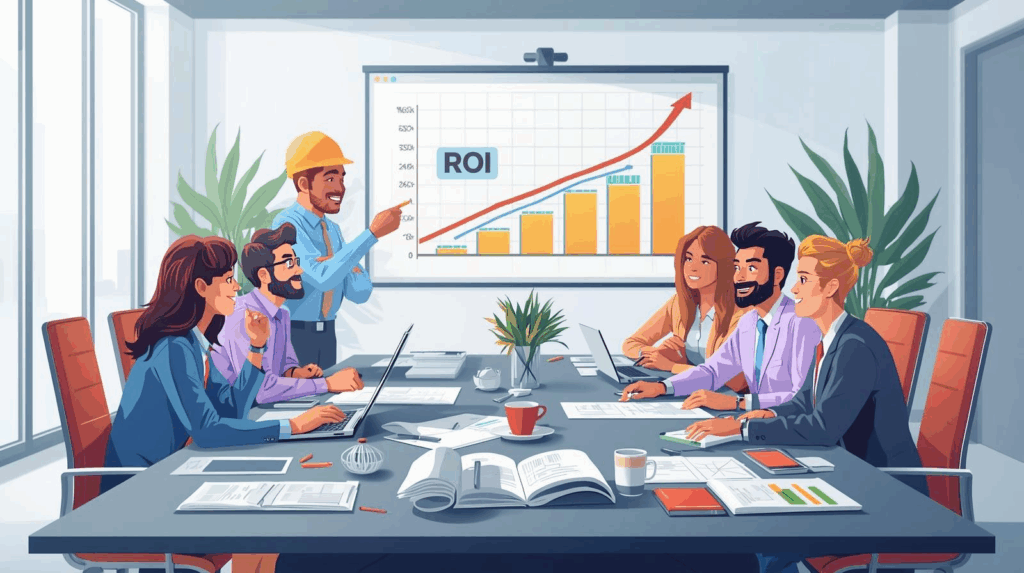
When it comes to CRM systems in the AEC world, one of the biggest questions is simple: is it worth it? Return on Investment (ROI) is not just about proving value to leadership, it is about making smarter choices with your firm’s most valuable resources: time, talent, and treasure.
During our recent TrebleHook webinar (despite a few technical hiccups along the way), we dug into what really matters when measuring ROI and why firms that track it consistently see better outcomes. Here are some of the key takeaways.
Time: Your Most Finite Resource
In the AEC space, time is everything. Every pursuit, every proposal, every meeting eats into the hours your team has available. Tracking how much time you are spending on pursuits versus the return you are actually getting is a game-changer.
For example, say you spend 100 hours chasing a job that turns into a $1 million win. That is a 10x return on your time. On the flip side, if you are consistently burning hours on pursuits that do not convert, your ROI is negative.
The lesson? Measure time spent, compare across pursuits, and focus your energy where it pays off most.
Talent: Playing to Your Strengths
Not all projects or teams are created equal. Your firm has unique expertise that gives you a competitive edge, and ROI helps shine a light on where that expertise matters most.
Think about it: if your architects are experts in airport design, why stretch them thin on medical office projects where win rates are lower? By tracking ROI by market, delivery method, or team, you uncover which talents deliver the highest return and where you should double down.
Treasure: Dollars In, Dollars Out
ROI is not just about time and skill, it is also about money. Every trade show, golf outing, or new software purchase comes with a cost. The real question is: what do you get back?
One example we shared was a $20,000 trade show investment that led to $500,000 in project wins. That is a 2,500% ROI. Compare that to a golf tournament where the results are fuzzy, and it is easy to see where your budget should go next year.
When firms track ROI across marketing efforts, pursuits, and investments, decision-making gets a whole lot easier. Leaders no longer have to guess, they can see which activities generate results and which ones do not.
Why CRM ROI Hits Different
So how does this tie back to CRM? Simple. A CRM helps you capture, track, and analyze all this data in one place. Without it, most firms are flying blind.
Take a marketer spending 15 hours a month on manual reporting. At $100 an hour, that is $18,000 a year in wasted time. A CRM that automates that process does not just save money, it frees up talent to focus on higher-value work, like winning new projects.
And beyond the numbers, there are intangible returns too: less burnout, better collaboration, and a culture where decisions are driven by data, not gut feel.
Start Simple, Prove Value
One of the best pieces of advice from the webinar was this: do not overcomplicate ROI. Start small. Pick two or three metrics, maybe pursuit hit rates, time spent, or marketing ROI, and track them consistently for 90 days.
Show the results. Share the story with your team. Once you build momentum, you can expand your tracking and refine your approach.
Turning ROI Into a Growth Mindset
Measuring ROI on your CRM is not just a leadership exercise, it is a way to empower your entire firm to spend time, talent, and treasure where it counts most. With the right framework, you will stop guessing and start making decisions backed by data.
So, whether you are chasing projects, running marketing programs, or deciding on tech investments, ask yourself: what is the return? The firms that answer that question well are the ones that grow with vision, strategy, and confidence.